

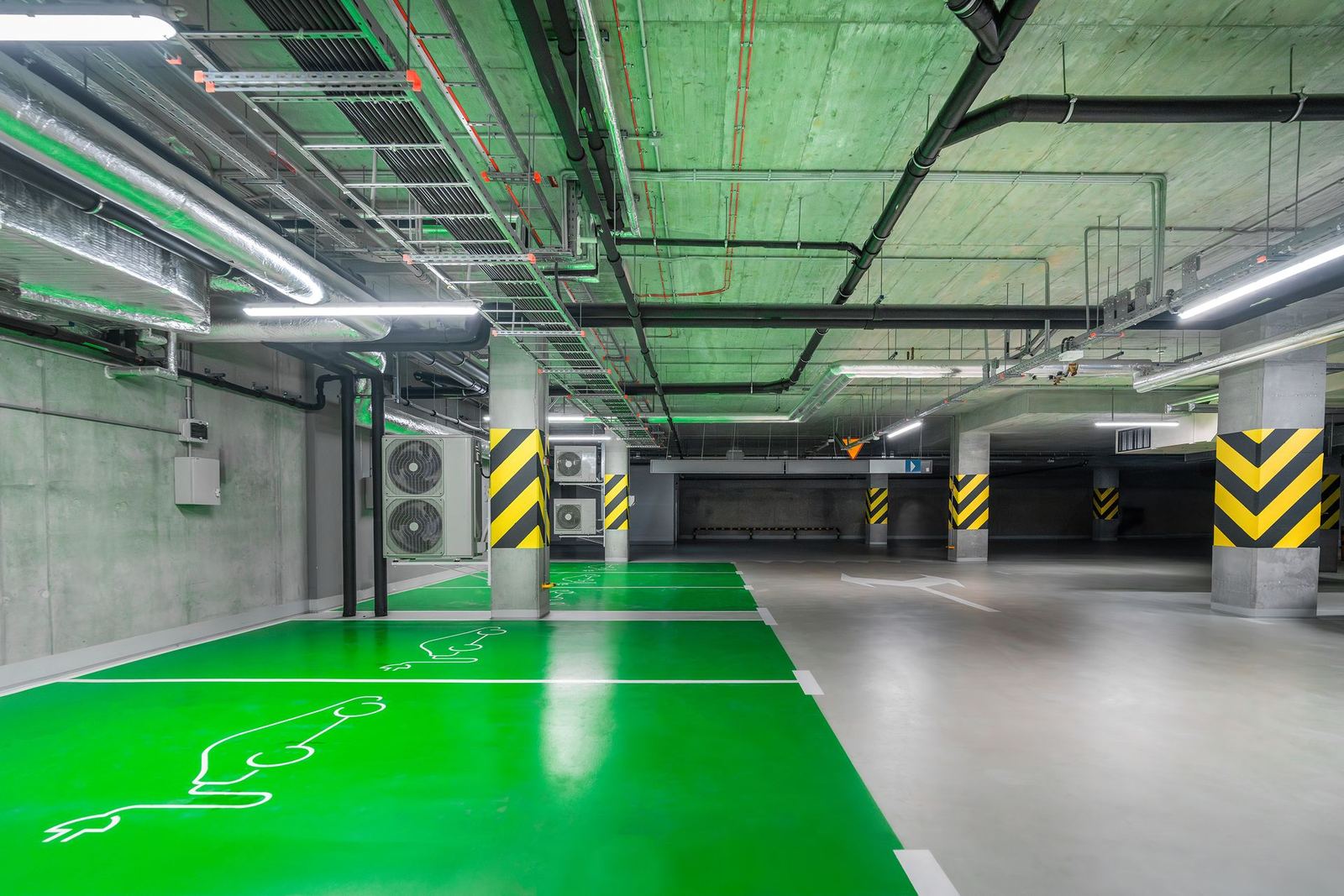
Utilisation, per-kWh margin, grid connection and operating costs: an example financial model for a DC hub.
A charging station investment looks simple at first glance, but a few key variables determine the outcome: utilisation, per-kWh margin, grid connection cost and operating expenses. Let's model a 2 × 120 kW DC hub as an example.
Investment items
- Two AMP-D120 units and installation: about 3.8 million TRY
- Transformer and grid connection: 1.2-2.5 million TRY (varies by location)
- Civil works, lighting, signage and cameras: 0.5 million TRY
Total investment is about 5.5 to 6.8 million TRY.
Revenue assumptions
With average daily utilisation of 12% per DC socket (about 2.9 hours) and average power of 70 kW, energy sold is 200 kWh per socket per day. For two sockets that is 400 kWh a day, or about 146 MWh a year. At an average selling price of 15 TRY/kWh, gross revenue is 2.19 million TRY.
Cost items
Electricity purchase cost (including YEK-G) is about 6.5 TRY/kWh, or 0.95 million TRY a year. Maintenance, insurance, software and communications cost 0.25 million TRY a year, and payment commission of 2% is 0.04 million TRY. Net operating income is about 0.95 million TRY.
Payback
With a 6 million TRY investment, payback is about 6.3 years. If utilisation rises to 20%, net income climbs to about 1.75 million TRY and payback falls to 3.4 years. Location choice and utilisation growth are therefore everything.
Risks
The main risks are passing electricity price rises through to the per-kWh selling price, competing stations and technology change (higher power). Amperya's revenue-share and turnkey models share these risks in different ways. For a detailed pre-feasibility study you can fill in the partnership form.
Sensitivity analysis
The model should be tested against three variables. First, selling price: a 1 TRY difference per kWh means about 146,000 TRY of revenue a year. Second, electricity purchase cost: a fixed-price long-term agreement reduces this risk. Third, utilisation: locations stuck below 8% often cannot repay the investment. That is why vehicle traffic, nearby EV numbers and distance to competing stations are examined carefully in site selection.
As an operator managing many hubs at once, we treat a 12% utilisation assumption as prudent for new investors; our existing hubs average above 15%.
Financing options
Equipment loans and leasing can fund part of the investment. For some projects, renewable energy and electric transport incentives offer tax relief or accelerated depreciation; we review current supports together during the application period.